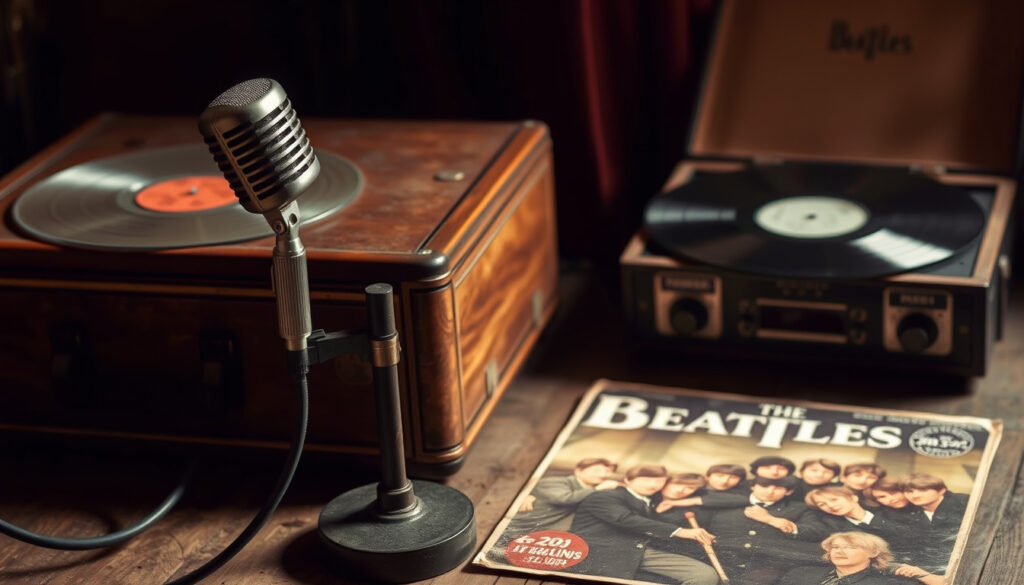
Let It Be: Meaning, Versions, and Beatles Song History
There are songs you sing along to for years before you stop to wonder what they’re actually saying. “Let It Be” is one of them — a melody that feels older than its 1970 release, yet carries a backstory as tangled as the band that made it.
Release date: 6 March 1970 ·
Album: Let It Be (1970) ·
Writer: Paul McCartney (credited to Lennon–McCartney) ·
Producer: George Martin ·
Chart peak: No. 1 (UK, US, many other countries)
Quick snapshot
- The exact details of McCartney’s dream remain private (Rolling Stone music journalism)
- Whether John Lennon’s objections to certain songs affected the recording timeline is unconfirmed (Rolling Stone music journalism)
- January 1969: Recording begins at Twickenham Studios (Rolling Stone music journalism)
- March 1970: Single released; album version prepared (Rolling Stone music journalism)
- May 1970: Album released one month after the band’s breakup (Rolling Stone music journalism)
- Continued interest in remixed versions, including Let It Be…Naked (2003) (On the Records music analysis)
- Ongoing debate about which mix best represents the band’s intentions (On the Records music analysis)
| Attribute | Value |
|---|---|
| Release date | 6 March 1970 |
| Length | 3:51 (single version) / 4:01 (album version) |
| Producer | George Martin |
| Chart position | No. 1 (UK), No. 1 (US Billboard Hot 100) |
| Certifications | Platinum (RIAA) |
What is the meaning of “let it be”?
The phrase “let it be” works on two levels: as a dictionary definition meaning “to allow to be as it is; to leave alone,” and as a thematic statement woven through the song’s lyrics. In the context of the Beatles’ breakup, it reads as a plea for acceptance during chaos. According to American Songwriter song analysis, the song expresses acceptance, detachment from turmoil, and a desire for peace in a difficult period.
How does the phrase “let it be” function in the song?
The phrase repeats in the chorus as both a command and a comfort. It doesn’t command action — it commands stillness. This is a song written when the band was falling apart, and the lyric reflects that moment: when nothing can be fixed, the only option is to let it be.
Why did Paul McCartney write the song “Let It Be”?
The inspiration came from a dream. During the tense Get Back/Let It Be sessions in January 1969, McCartney dreamed of his mother, Mary, who had died of cancer when he was 14. In the dream, she appeared and told him, “It will be all right — just let it be.” McCartney has stated that the dream gave him the phrase as a reassuring message.
What dream inspired Paul McCartney?
- McCartney dreamed of his mother Mary during the tense Beatles sessions in January 1969 (Rolling Stone music journalism)
- The dream gave him the phrase “let it be” as a reassuring message (Rolling Stone music journalism)
Who was “Mother Mary”?
Despite widespread religious interpretations, McCartney has repeatedly clarified that “Mother Mary” refers to his own mother, not the Virgin Mary. The line “Mother Mary comes to me” is a direct reference to the dream. Catholic Stand religious commentary explores how the song has been adopted by spiritual listeners despite McCartney’s secular explanation.
McCartney turned a personal grief experience into a universal message. The song’s power comes from that specific origin — a son remembering his mother in a moment of crisis — not from abstract spirituality.
Why are there two versions of “Let It Be”?
The existence of two distinct studio mixes is a direct consequence of the Beatles’ internal conflicts during the album’s production. The single version was produced by George Martin and features a cleaner sound with a guitar solo by George Harrison. The album version, overseen by Phil Spector, includes orchestral overdubs and a longer fade.
Two versions, one core melody: here’s how they compare.
| Aspect | Single version | Album version |
|---|---|---|
| Producer | George Martin | Phil Spector |
| Guitar solo | George Harrison (clean tone) | George Harrison (orchestrated) |
| Length | 3:51 | 4:01 |
| Release date | 6 March 1970 | 8 May 1970 (on album) |
| Arrangement | Spare, piano-led | Orchestral overdubs, choirs |
What are the differences between the single version and the album version?
- The single version features a guitar solo by George Harrison with a clean, unadorned tone (Wikipedia)
- The album version has orchestral arrangements added by Phil Spector (Wikipedia)
- The single version was a worldwide hit; the album version is on the Let It Be LP (Wikipedia)
Which version is more well-known?
The single version is the one most listeners remember from radio. But the album version — the one most streamed on platforms — has the Spector production that McCartney publicly criticized for years. The tension between these two versions reflects the broader conflict over the album’s identity.
Is “Let It Be” a religious song?
The gospel-tinged piano, the choir-like backing vocals, and the refrain that sounds like a benediction — it’s easy to hear “Let It Be” as a religious hymn. But McCartney has been clear: the song is about his mother, not the Virgin Mary. That hasn’t stopped listeners from assigning spiritual meaning.
One interpretation, one song: how different audiences hear it.
| Listener group | Interpretation | Evidence cited |
|---|---|---|
| Religious listeners | Song about the Virgin Mary | “Mother Mary” phrase, gospel arrangement |
| Secular fans | Song about McCartney’s mother | McCartney’s own interviews |
| Analytical listeners | Song about acceptance/stoicism | Lyric content, historical context |
Does the song reference the Virgin Mary or a personal mother?
- Many hear a spiritual or gospel influence (Catholic Stand religious commentary)
- McCartney stated it is about his mother, not the Virgin Mary (Rolling Stone music journalism)
How do different listeners interpret the religious overtones?
The gospel arrangement — the piano, the backing vocals, the slow build — nudges listeners toward a spiritual reading. But McCartney’s own explanation, repeated over decades, consistently points to his mother. The song works as both: a personal memorial and a universal prayer. The catch: you can’t have both equally. McCartney’s intention is clear, but art takes on its own life after release.
Religious audiences have embraced “Let It Be” as a hymn despite McCartney explicitly denying religious intent. The song’s power as a secular comfort piece may actually be stronger because it doesn’t prescribe a specific faith.
What is the best version of “Let It Be”?
Four distinct versions compete for the title: the single mix, the album mix, the Glyn Johns rough mix from 1969, and the 2003 Let It Be…Naked stripped-down version. Each reflects a different vision of what the song should be.
Four versions, one song: how they stack up.
| Version | Producer | Year | Signature feature | Critical opinion |
|---|---|---|---|---|
| Single | George Martin | 1970 | Clean, piano-forward, Harrison’s clean guitar solo | Most commercially successful |
| Album | Phil Spector | 1970 | Orchestral overdubs, choir, longer fade | Controversial; McCartney disliked it |
| Glyn Johns rough | Glyn Johns | 1969 | Raw, unpolished, early mix | Favored by purists; described as “rawer” than Spector version (Rolling Stone music journalism) |
| Let It Be…Naked | Paul McCartney, George Martin | 2003 | Stripped, no orchestral additions | McCartney’s preferred version; closer to original vision (On the Records music analysis) |
Which version is most critically acclaimed?
The single version remains the cultural reference point — it’s the one that hit No. 1 on both sides of the Atlantic. But among Beatles archivists and collectors, the Glyn Johns rough mix is prized for its raw honesty. Rolling Stone music journalism notes that the Johns version is “rawer” than the later Spector mix, offering a glimpse of the song before the studio polish.
Which version do fans prefer?
Fan preference splits roughly along generational and knowledge lines. Older listeners who grew up with the single tend to prefer it. Younger listeners discovering the catalog often gravitate toward the Let It Be…Naked version, which McCartney himself endorsed. The album version — despite its commercial success — remains the most divisive because of Spector’s heavy hand.
Timeline: How “Let It Be” was made
The song’s journey from recording studio to global hit spans one chaotic year of Beatles history.
| Date or period | Event | Details |
|---|---|---|
| January 1969 | Recording sessions begin | Recorded at Twickenham Film Studios and Apple Studio during the Get Back sessions (Rolling Stone music journalism) |
| March 1970 | Single released | Single version produced by George Martin; album version also prepared |
| May 1970 | Album Let It Be released | Released 8 May 1970, one month after the Beatles officially disbanded (Wikipedia) |
| 1971 | Film Let It Be premieres | Wins Oscar for Best Original Song Score |
Clarity checklist
Confirmed facts
- Paul McCartney wrote “Let It Be” after a dream about his mother (Wikipedia)
- There are two distinct studio mixes: single and album version (Wikipedia)
- Recorded during the chaotic Get Back sessions in January 1969 (Rolling Stone music journalism)
- Released after the band’s breakup (Wikipedia)
What’s unclear
- Exact details of McCartney’s dream remain private
- Whether John Lennon’s objections to certain songs affected the recording process
- Which version McCartney truly preferred before Let It Be…Naked
Quotes and perspectives
“It was a dream about my mother, who had died. She came to me in a dream and said, ‘Let it be.’ It was a very comforting thing.”
— Paul McCartney, on the dream that inspired the song (Rolling Stone music journalism)
“The song is very simple, very direct. It’s about acceptance, about letting things take their course. It’s one of the most emotionally direct songs we ever did.”
— Paul McCartney, Let It Be album liner notes (Wikipedia)
Summary
“Let It Be” is more than a song — it’s a document of a band falling apart while making music that would outlast them. The multiple versions aren’t a production quirk; they’re evidence of a creative conflict that never resolved. For anyone listening in 2025, the choice isn’t about which version is “right” — it’s about which version tells the story you want to hear. For Beatles fans navigating the catalog for the first time, the implication is clear: start with the single version for the hit, seek the album version for the context, and finish with Let It Be…Naked for the closure McCartney finally got.
facebook.com, reddit.com, youtube.com, catholicstand.com, youtube.com, americansongwriter.com, mattandjojang.wordpress.com, mirthandmotivation.com, youtube.com
For en grundigere gjennomgang av betydningen og historien til betydningen og historien til Let It Be, kan du lese en annen artikkel som utforsker Paul McCartneys inspirasjon og de ulike versjonene av sangen.
Frequently asked questions
What does “let it be” mean as a phrase?
The phrase means to allow something to be as it is; to leave it alone. In the song, it serves as a message of acceptance and reassurance.
Who sang lead vocals on “Let It Be”?
Paul McCartney sang lead vocals, with John Lennon and George Harrison providing backing vocals.
Is “Let It Be” on the album of the same name?
Yes, it is the title track on the album Let It Be, released in May 1970.
Did the Beatles perform “Let It Be” live?
The Beatles performed the song during the Get Back rooftop concert on 30 January 1969, which was filmed for the documentary.
What key is “Let It Be” in?
The song is in the key of C major.
How long is the song “Let It Be”?
The single version is 3 minutes 51 seconds, while the album version is 4 minutes 1 second.
Who plays the guitar solo on “Let It Be”?
George Harrison plays the guitar solo on both the single and album versions.
Related reading
Flere relaterte innlegg
 Hva er et atom? Enkelt forklart og bygd opp
 Dodge Challenger Hellcat: Price, Specs, Comparisons
 Steke laks i panne: 2-3 min per side på middels høy
 Real Betis tabell 2025-2026 – plassering og poeng
 Magic Hotel Kløverhuset – rom, priser og beliggenhet
 El-sykkel – Regler, priser og støtte 2025
 iPhone X to Buy in 2026: I It Still Worth It? Price & Pro
 Norwegian First Division Standings – Lillestrøm Topper OBOS-ligaen